
Antike Städte der türkischen Ägäis
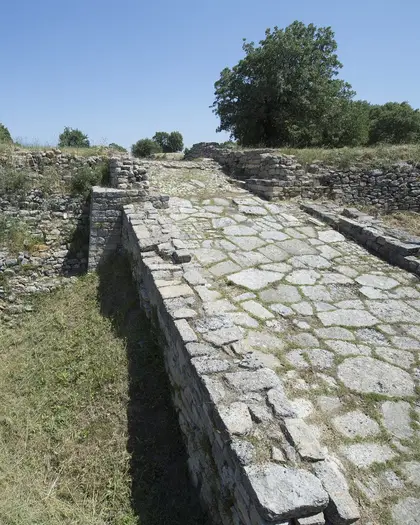
In Troja lebten rund 4.000 Jahre lang Menschen, und die Grabungen haben hier neun übereinanderliegende Schichten freigelegt. Ephesos zog mehrmals um und folgte der Küste nach Westen, während die Mündung des Kaystros verlandete. Die Sedimente des Großen Mäander ließen den Hafen von Milet verlanden, und der Latmische Golf, an dem Herakleia lag, wurde durch sie zum heutigen Bafa-See.
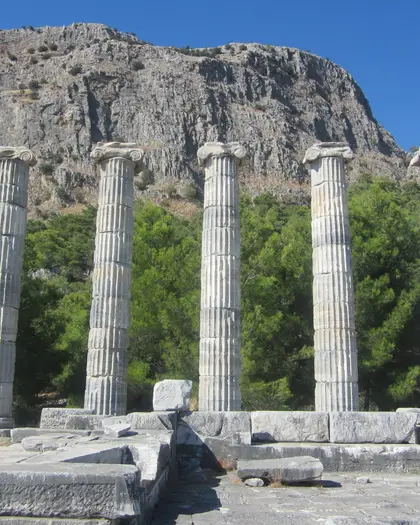
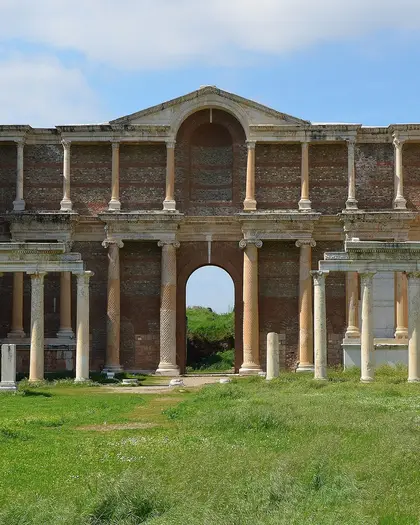
Sardes war die Hauptstadt des Lydischen Reichs, Aphrodisias wurde durch den Marmor seiner Steinbrüche reich, und die Attalidenkönige von Pergamon wählten Pamukkale für die Bäderstadt Hierapolis. Priene, im 4. Jh. v. Chr. an einem Hang nach einem regelmäßigen Rasterplan neu angelegt, ist ein Musterbeispiel hellenistischen Städtebaus.
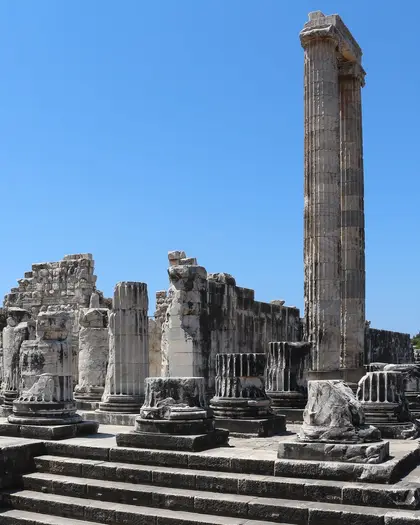
Dazu gehören Heiligtümer: der nie vollendete Apollontempel von Didyma, zu dem man kam, um das Orakel zu befragen, und Labraunda, das bedeutendste Heiligtum Westkariens.
Städte zu diesem Thema
- Antike Stadt Aizanoi Türkei · 3. Jt. v. Chr.
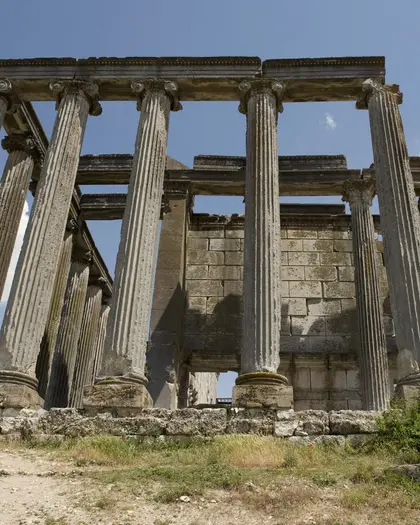
- Antike Stadt Alexandria Troas Türkei · 4. Jh. v. Chr.
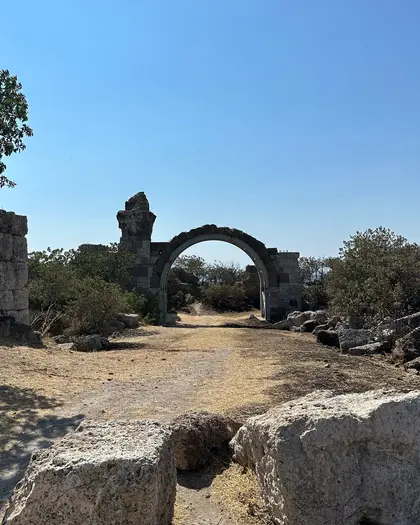
- Antike Stadt Iasos Türkei · Spätes 3. Jt. v. Chr.
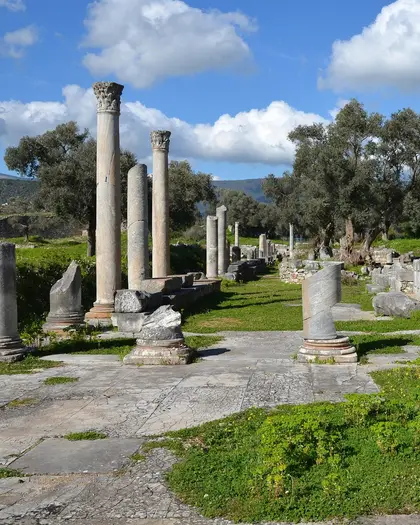
- Antike Stadt Kaunos Türkei · 9. Jh. v. Chr.
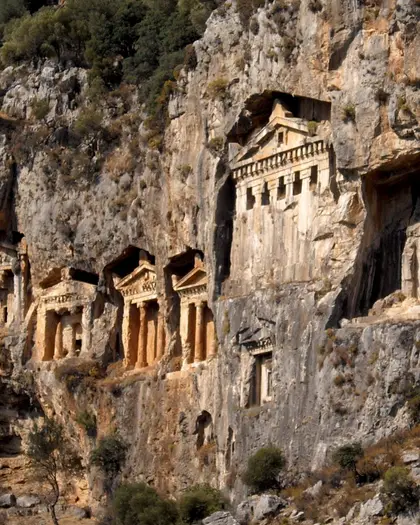
- Antike Stadt Knidos Türkei · 6. Jh. v. Chr.
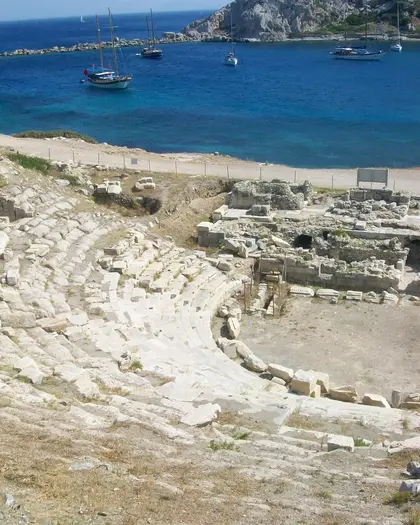
- Antike Stadt Milet Türkei · Archaische bis byzantinische Zeit
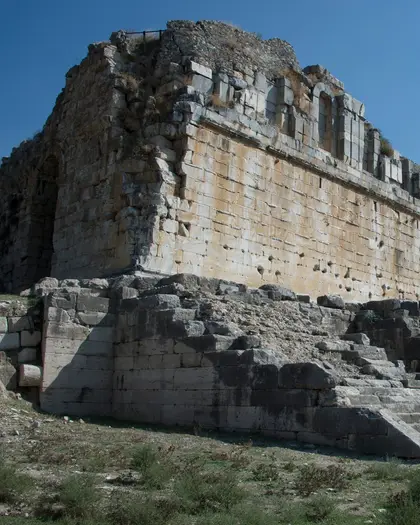
- Antike Stadt Stratonikeia Türkei · 3. Jh. v. Chr.
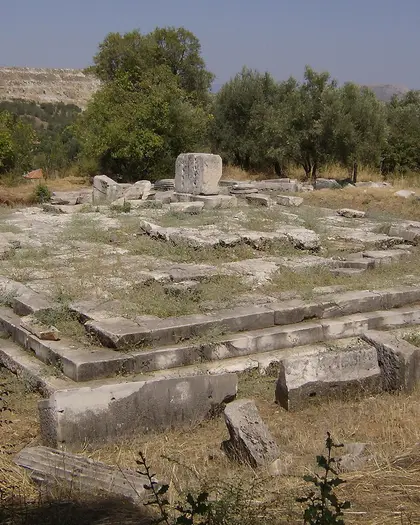
- Antike Stadt Teos Türkei · Geometrische bis römische Zeit
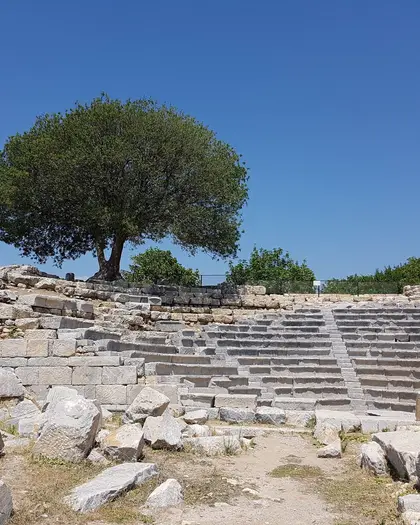
- Aphrodisias Türkei · 2. Jh. v. Chr.
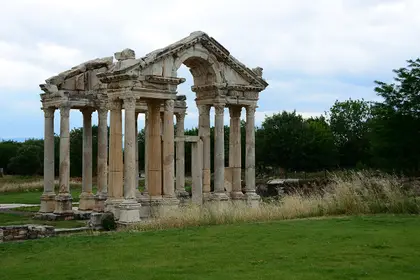
- Apollontempel von Didyma Türkei · Antike
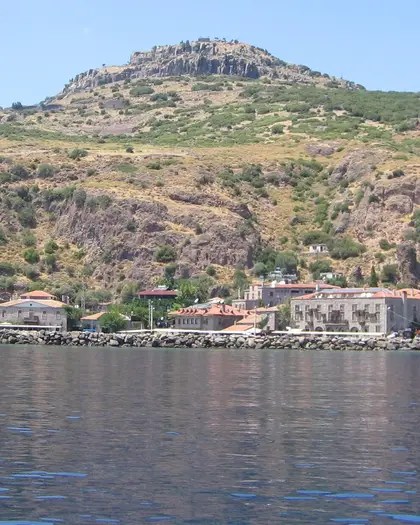
- Assos Türkei · 7. Jh. v. Chr.
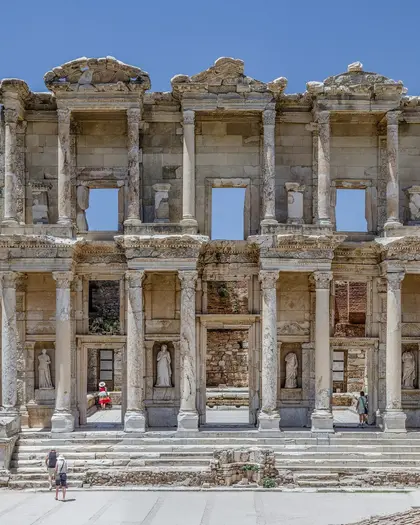
- Ephesos Türkei · 10. Jh. v. Chr.
- Halikarnassos Türkei · 4. Jh. v. Chr.
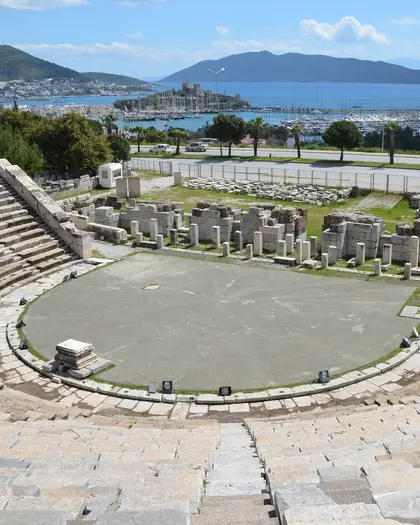
- Heiligtum von Labraunda Türkei · 7. Jh. v. Chr.
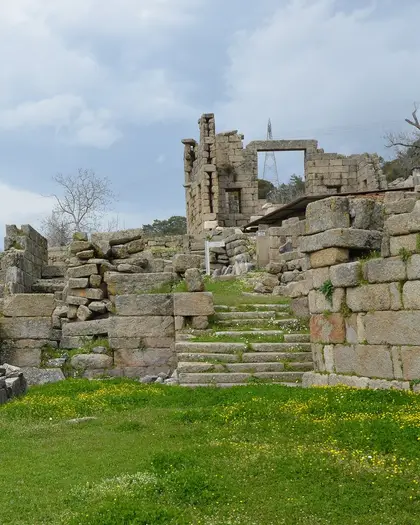
- Herakleia am Latmos Türkei · Hellenistische Zeit
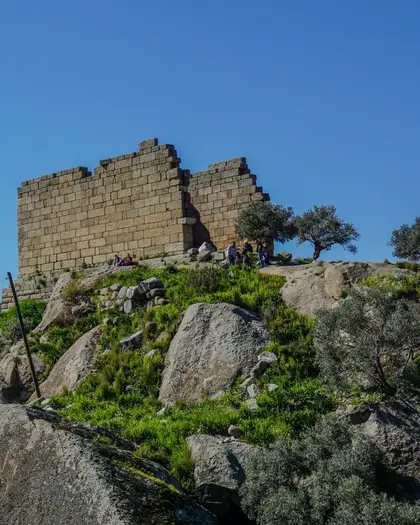
- Hierapolis Türkei · 2. Jh. v. Chr.
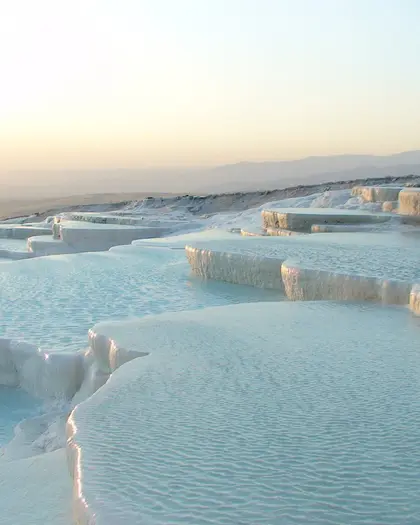
- Laodikeia Türkei · 3. Jh. v. Chr.
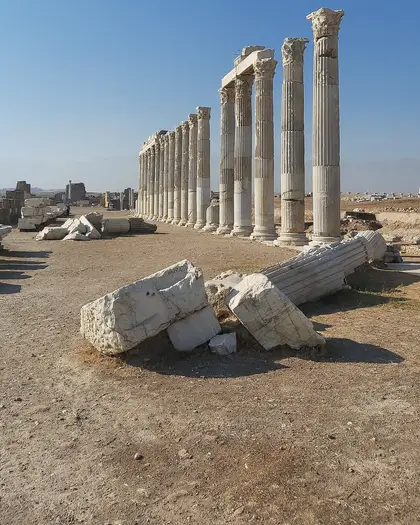
- Magnesia am Mäander Türkei · um 400 v. Chr. bis byzantinische Zeit
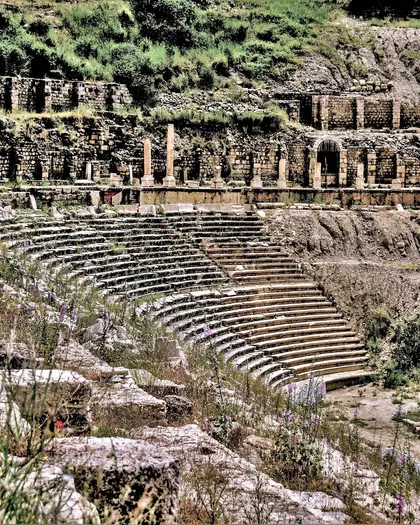
- Nysa am Mäander Türkei · 3. Jh. v. Chr.
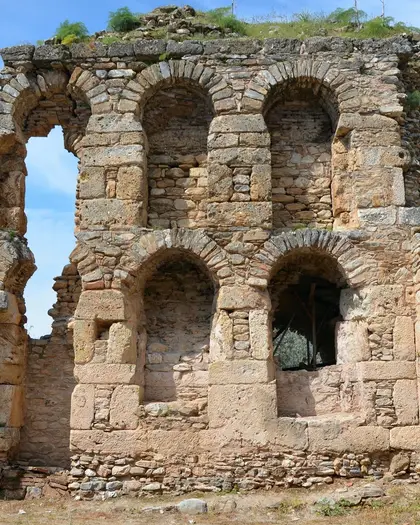
- Pergamon Türkei · 3. Jh. v. Chr.
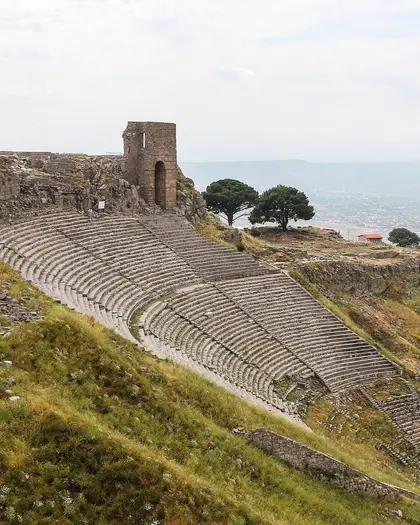
- Priene Türkei · 4. Jh. v. Chr.
- Sardes und die lydischen Grabhügel von Bin Tepe Türkei · 8.–6. Jh. v. Chr.
- Troja Türkei · 3000 v. Chr.
Verwandte Themen
Bildnachweis
- Antike Stadt Aizanoi
Foto: “Aizanoi Zeus temple 2246”, Dosseman · CC BY-SA 4.0 · Wikimedia Commons. Für das Web zugeschnitten und verkleinert.
- Antike Stadt Alexandria Troas
Foto: “Herodes Atticus Bath near Alexandria Troas”, Raicem · CC BY 4.0 · Wikimedia Commons. Für das Web zugeschnitten und verkleinert.
- Antike Stadt Iasos
Foto: “The Agora, reconstructed mainly during Hadrian’s time, its initial building must have started in the 4th century BC, Iassos, Caria, Turkey (20806588152)”, Carole Raddato · FRANKFURT, Germany · CC BY-SA 2.0 · Wikimedia Commons. Für das Web zugeschnitten und verkleinert.
- Antike Stadt Kaunos
Foto: “Lycian rock-cut tombs in Hellenistic style - Dalyan, Turkey”, Rev Stan · London, UK · CC BY 2.0 · Wikimedia Commons. Für das Web zugeschnitten und verkleinert.
- Antike Stadt Knidos
Foto: “Knidos - antik tiyatro”, Annahme der Existenz · CC BY-SA 2.0 · Wikimedia Commons. Für das Web zugeschnitten und verkleinert.
- Antike Stadt Milet
Foto: “Miletus Theatre Front side in 2015 3314”, Dosseman · CC BY-SA 4.0 · Wikimedia Commons. Für das Web zugeschnitten und verkleinert.
- Antike Stadt Stratonikeia
Foto: “Stratonicea, Sebasteion”, gabri331 · Gemeinfrei · Wikimedia Commons. Für das Web zugeschnitten und verkleinert.
- Antike Stadt Teos
Foto: “Teos bouleuterion”, Isabeau · CC BY-SA 4.0 · Wikimedia Commons. Für das Web zugeschnitten und verkleinert.
- Aphrodisias
Foto: “APHRODISIAS Ancient City – The monumental gateway or tetrapylon”, Feridun F. Alkaya · CC0 · Wikimedia Commons. Für das Web zugeschnitten und verkleinert.
- Apollontempel von Didyma
Foto: “Temple of Apollo, Didyma 03”, Bernard Gagnon · CC BY-SA 3.0 · Wikimedia Commons. Für das Web zugeschnitten und verkleinert.
- Assos
Foto: “Assos acropolis from the sea”, KureCewlik81 · Gemeinfrei · Wikimedia Commons. Für das Web zugeschnitten und verkleinert.
- Ephesos
Foto: “Ephesus Celsus Library Façade”, Benh LIEU SONG · CC BY-SA 3.0 · Wikimedia Commons. Für das Web zugeschnitten und verkleinert.
- Halikarnassos
Foto: “The theatre of ancient Halicarnassus, built in the 4th century BC during the reign of King Mausolos and enlarged in the 2nd century AD, the original capacity of the theatre was 10,000, Bodrum, Turkey (20628392816)”, Carole Raddato · FRANKFURT, Germany · CC BY-SA 2.0 · Wikimedia Commons. Für das Web zugeschnitten und verkleinert.
- Heiligtum von Labraunda
Foto: “The ruins of Andron B erected by Mausollos (377-352 BC), it had two Ionic columns and a Doric frieze with triglyphs, Sanctuary of Zeus Labraundos, Labraunda, Caria, Turkey (31315834773)”, Carole Raddato · FRANKFURT, Germany · CC BY-SA 2.0 · Wikimedia Commons. Für das Web zugeschnitten und verkleinert.
- Herakleia am Latmos
Foto: “Herakleia Athena Tapınağı”, Aerdemsenturk · CC BY-SA 4.0 · Wikimedia Commons. Für das Web zugeschnitten und verkleinert.
- Hierapolis
Foto: “Pamukkale Hierapolis Travertine pools”, Pvasiliadis · CC BY-SA 3.0 · Wikimedia Commons. Für das Web zugeschnitten und verkleinert.
- Laodikeia
Foto: “Laodicea on the Lycus, 2021”, Wikimedia-Commons-Nutzer Basak · CC0 · Wikimedia Commons. Für das Web zugeschnitten und verkleinert.
- Magnesia am Mäander
Foto: “Magnesia Stadium”, Feridun F. Alkaya · CC BY-SA 2.0 · Wikimedia Commons. Für das Web zugeschnitten und verkleinert.
- Nysa am Mäander
Foto: “The Library with 16 bookshelves in 2 stories accessible by means of wooden galleries, built around 130 AD, considered to be Turkey's second-best preserved ancient library structure after the "Celsus Library" of Ephesus, Nysa on the Maea”, Carole Raddato · CC BY-SA 2.0 · Wikimedia Commons. Für das Web zugeschnitten und verkleinert.
- Pergamon
Foto: “Theatre of Pergamon”, Bernard Gagnon · CC BY-SA 3.0 · Wikimedia Commons. Für das Web zugeschnitten und verkleinert.
- Priene
Foto: “Athena Temple Priene 1”, Tomisti · CC BY-SA 4.0 · Wikimedia Commons. Für das Web zugeschnitten und verkleinert.
- Sardes und die lydischen Grabhügel von Bin Tepe
Foto: “The Bath-Gymnasium complex at Sardis, late 2nd - early 3rd century AD, Sardis, Turkey (16391012853)”, Carole Raddato · FRANKFURT, Germany · CC BY-SA 2.0 · Wikimedia Commons. Für das Web zugeschnitten und verkleinert.
- Troja
Foto: “Troy ramp 7769”, Dosseman · CC BY-SA 4.0 · Wikimedia Commons. Für das Web zugeschnitten und verkleinert.


