
Necropolises and tombs
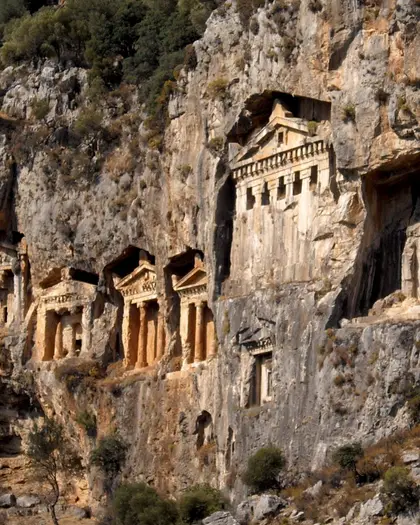
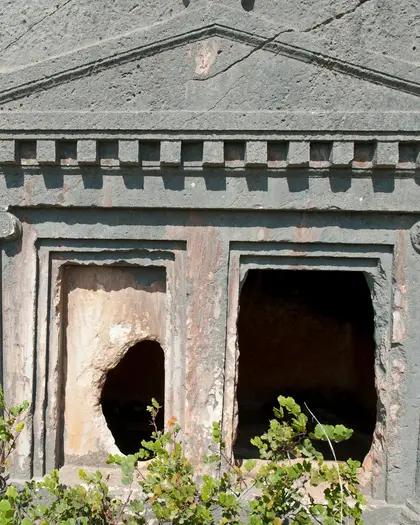
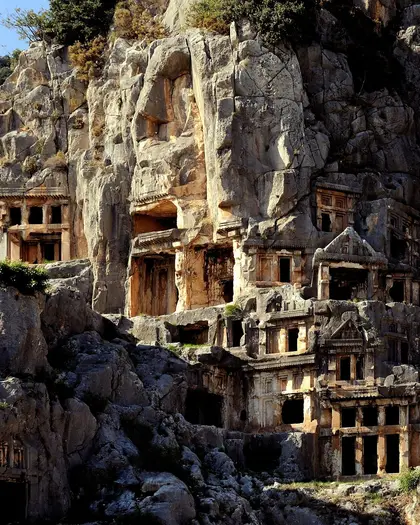
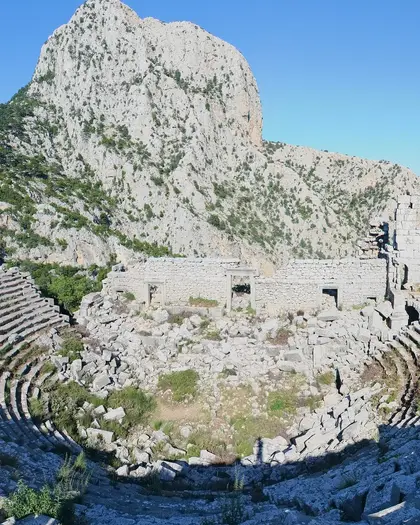
In many cities the dead were laid in tombs cut into the rock. At Kaunos the temple-fronted tombs, carved in the 4th century BC, were still in use in Roman times; at Myra, Lycian tombs are cut into the cliff beside the theatre; and Limyra has a monumental empty tomb built in AD 4 in memory of Gaius Caesar. Rock-cut tombs also survive at Termessos, Arykanda and Anazarbos.
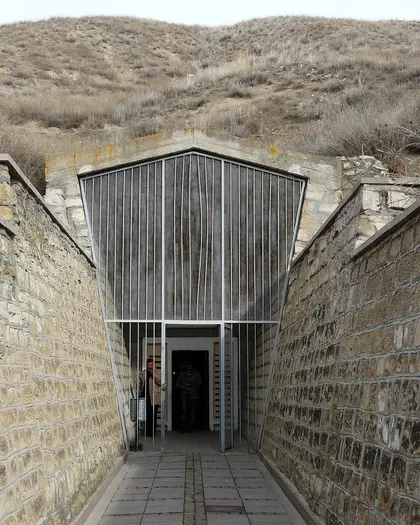
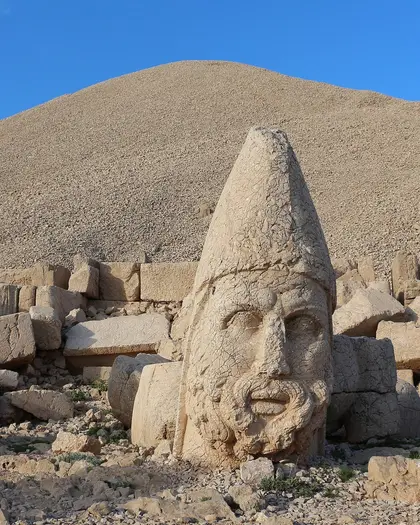
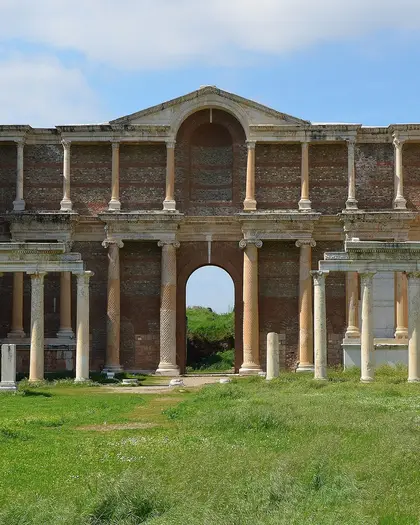
Elsewhere the dead lie beneath mounds. Under the Great Tumulus at Gordion, about 53 metres high, a wooden burial chamber has survived intact, and more than a hundred burial mounds of Lydian kings and nobles rise at Bin Tepe, near Sardis. Some of the more than 300 tumuli in the burial ground of Aigai go back to the 11th century BC, and on Mount Nemrut the burial mound built by Antiochus I has statue-lined terraces.
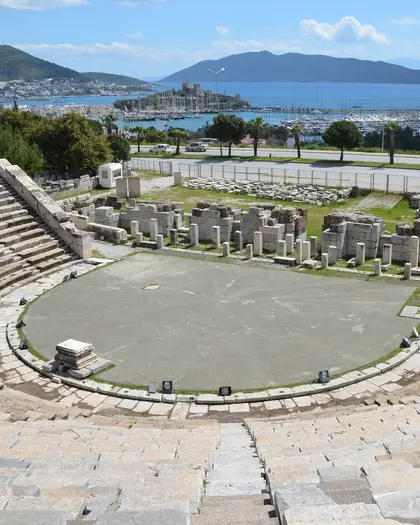
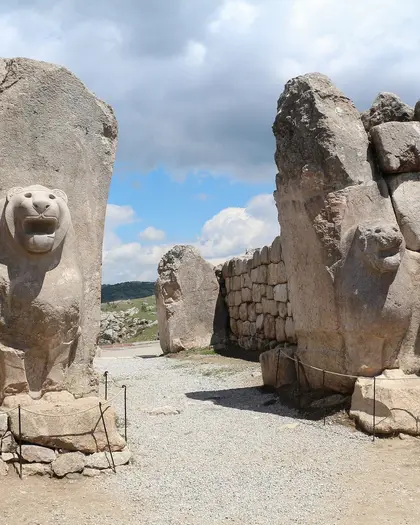
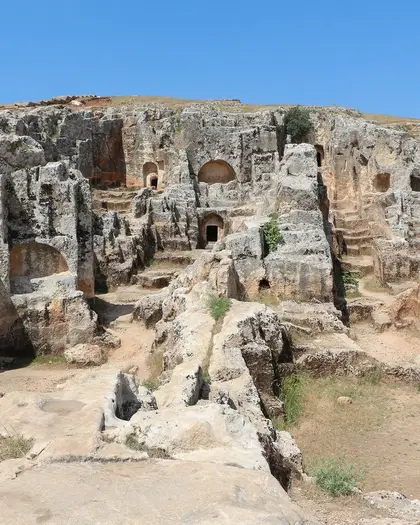
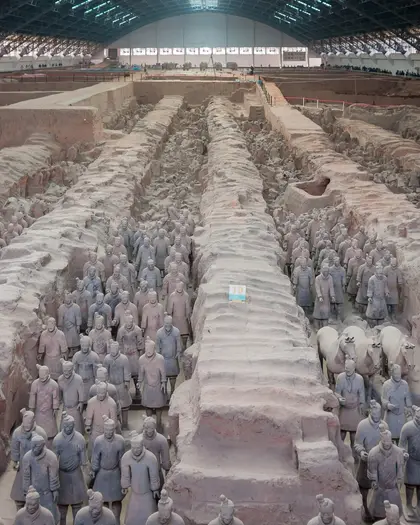
At Halicarnassus, the Mausoleum built for Mausolus was counted among the Seven Wonders of the Ancient World, and Perre, in Adıyaman, is surrounded by the region’s largest necropolis. At Hattusa, rock shelters near the road to Yazılıkaya held a cemetery of the Hittite period. And the tomb of Qin Shi Huang, the emperor who first united China, is guarded by the famous terracotta warriors.
Cities on this list
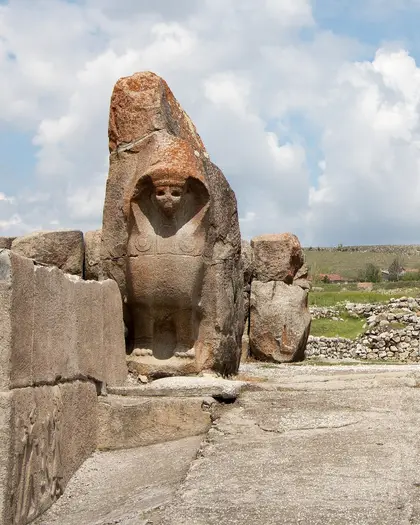
- Alacahöyük Archaeological Site Türkiye · 2500–2000 BC
- Amisos Türkiye · 6th century BC
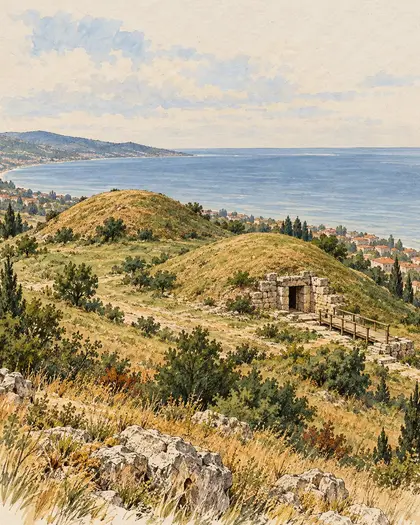 Illustration
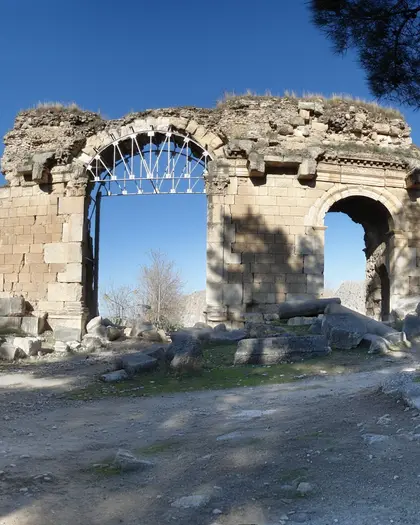
- Ancient City of Anazarbos Türkiye · Roman–Byzantine Period
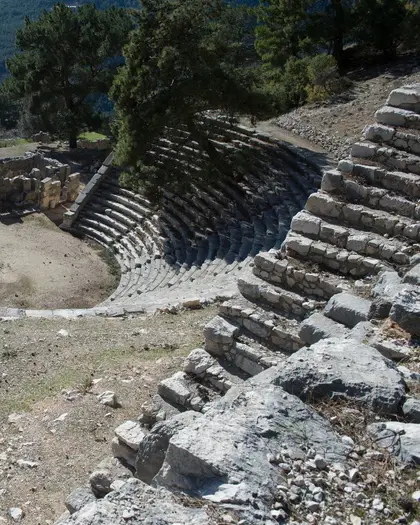
- Ancient City of Arykanda Türkiye · 4th century BC
- Ancient City of Kaunos Türkiye · 9th century BC
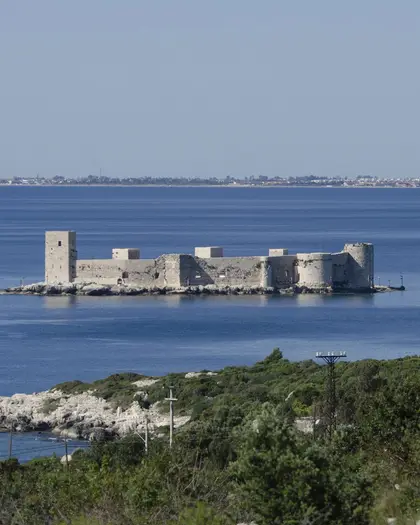
- Ancient City of Korykos Türkiye · Hellenistic Period
- Ancient City of Limyra Türkiye · 5th century BC–8th/9th century AD
- Ancient City of Myra Türkiye · Antiquity–Byzantine Period
- Ancient City of Pinara Türkiye · Lycian–Roman Period
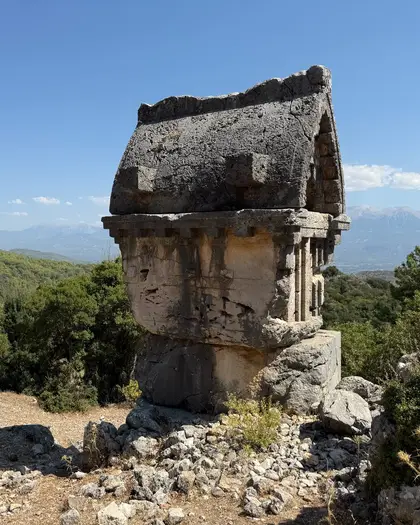
- Ancient City of Tlos Türkiye · 2nd millennium BC
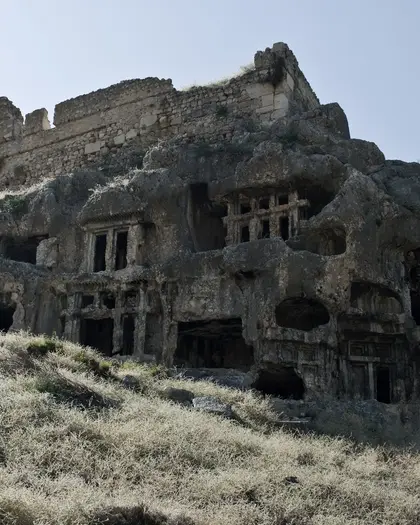
- Archaeological Site of Aigai (Vergina) Greece · From the 11th century BC
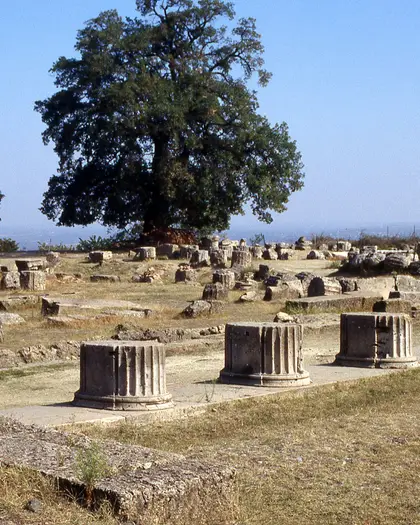
- Archaeological Site of Assos Türkiye · 7th century BC
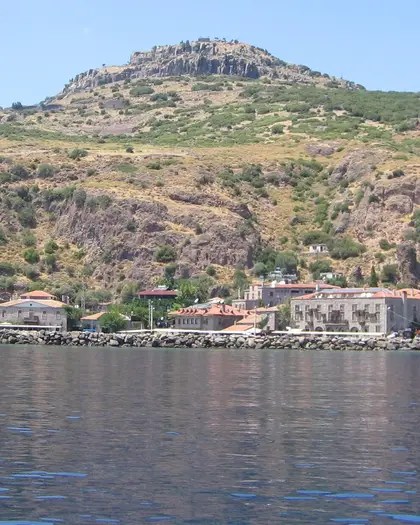
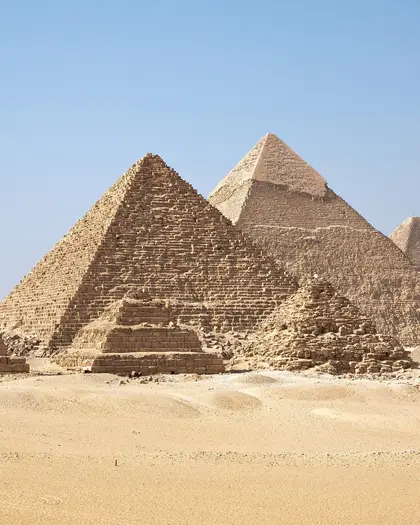
- Giza Pyramid Complex Egypt · 2600 BC
- Gordion Türkiye · 9th century BC
- Halicarnassus Türkiye · 4th century BC
- Hattusa Türkiye · 1600 BC
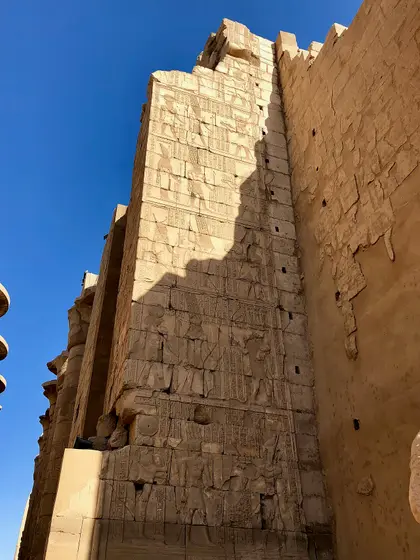
- Karnak Temple Complex Egypt · 2000 BC
- Mount Nemrut Türkiye · 1st century BC
- Pirin Perre Archaeological Site Türkiye · 163 BC–AD 72 (Commagene) and later
- Sardis and the Lydian Tumuli of Bin Tepe Türkiye · 8th–6th centuries BC
- Termessos Türkiye · Antiquity
- Terracotta Army China · 210 BC
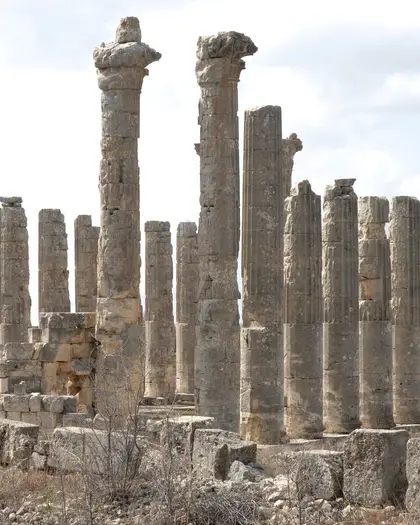
- Uzuncaburç Archaeological Site (Diocaesarea) Türkiye · Hellenistic–Roman Period
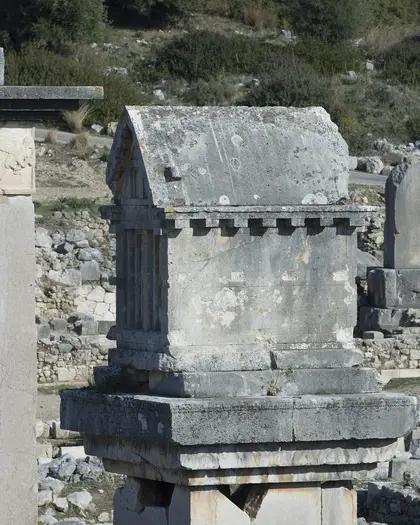
- Xanthos–Letoon Türkiye · 8th century BC
Related topics
Photo credits
- Alacahöyük Archaeological Site
Photo: “Sphinx Gate, Alaca Höyük 02”, Bernard Gagnon · CC BY-SA 3.0 · Wikimedia Commons. Cropped and resized for the web.
- Amisos
Illustration: Made for Antigone, not a photograph.
- Ancient City of Anazarbos
Photo: “Anazarbus klikya city south gate”, MUSTAFA TOR at English Wikipedia · CC BY-SA 3.0 · Wikimedia Commons. Cropped and resized for the web.
- Ancient City of Arykanda
Photo: “Arykanda Theatre 3829”, Dosseman · CC BY-SA 4.0 · Wikimedia Commons. Cropped and resized for the web.
- Ancient City of Kaunos
Photo: “Lycian rock-cut tombs in Hellenistic style - Dalyan, Turkey”, Rev Stan from London, UK · CC BY 2.0 · Wikimedia Commons. Cropped and resized for the web.
- Ancient City of Korykos
Photo: “Korykos - Kızkalesi 02”, Zeynel Cebeci · CC BY-SA 4.0 · Wikimedia Commons. Cropped and resized for the web.
- Ancient City of Limyra
Photo: “Limyra 5134”, Dosseman · CC BY-SA 4.0 · Wikimedia Commons. Cropped and resized for the web.
- Ancient City of Myra
Photo: “Myra Rock Tombs”, Saffron Blaze · CC BY-SA 3.0 · Wikimedia Commons. Cropped and resized for the web.
- Ancient City of Pinara
Photo: “Ruins of Pinara, Ancient Lycian city, Lycia, Turkey 15 47 29 723000”, Roman_Zacharij · CC BY-SA 4.0 · Wikimedia Commons. Cropped and resized for the web.
- Ancient City of Tlos
Photo: “Lycian tombs Tlos IMGP8369”, Nikodem Nijaki · CC BY-SA 3.0 · Wikimedia Commons. Cropped and resized for the web.
- Archaeological Site of Aigai (Vergina)
Photo: “Vergina Palace (1990) - 02”, Mark Landon · CC BY 4.0 · Wikimedia Commons. Cropped and resized for the web.
- Archaeological Site of Assos
Photo: “Assos acropolis from the sea”, KureCewlik81 · Public domain · Wikimedia Commons. Cropped and resized for the web.
- Giza Pyramid Complex
Photo: “All Gizah Pyramids”, Ricardo Liberato · CC BY-SA 2.0 · Wikimedia Commons. Cropped and resized for the web.
- Gordion
Photo: “Entrance and dromos of Tumulus MM, Midas Mound, Gordion”, Ywpark2003 · CC0 · Wikimedia Commons. Cropped and resized for the web.
- Halicarnassus
Photo: “The theatre of ancient Halicarnassus, built in the 4th century BC during the reign of King Mausolos and enlarged in the 2nd century AD, the original capacity of the theatre was 10,000, Bodrum, Turkey (20628392816)”, Carole Raddato from FRANKFURT, Germany · CC BY-SA 2.0 · Wikimedia Commons. Cropped and resized for the web.
- Hattusa
Photo: “Lion Gate, Hattusa 08”, Bernard Gagnon · CC BY-SA 3.0 · Wikimedia Commons. Cropped and resized for the web.
- Karnak Temple Complex
Photo: “Great Hypostyle Hall, Karnak Temple, Luxor, LG, EGY (48009557818)”, Warren LeMay · CC0 · Wikimedia Commons. Cropped and resized for the web.
- Mount Nemrut
Photo: “Nemrut Dağı 13”, Bernard Gagnon · CC BY-SA 3.0 · Wikimedia Commons. Cropped and resized for the web.
- Pirin Perre Archaeological Site
Photo: “Necropolis of Perre 02”, Bernard Gagnon · CC BY-SA 3.0 · Wikimedia Commons. Cropped and resized for the web.
- Sardis and the Lydian Tumuli of Bin Tepe
Photo: “The Bath-Gymnasium complex at Sardis, late 2nd - early 3rd century AD, Sardis, Turkey (16391012853)”, Carole Raddato from FRANKFURT, Germany · CC BY-SA 2.0 · Wikimedia Commons. Cropped and resized for the web.
- Termessos
Photo: “Termessos - Theater”, Ingo Mehling · CC BY-SA 3.0 · Wikimedia Commons. Cropped and resized for the web.
- Terracotta Army
Photo: “Xian China Terracotta-Army-Museum-02”, CEphoto, Uwe Aranas · CC BY-SA 3.0 · Wikimedia Commons. Cropped and resized for the web.
- Uzuncaburç Archaeological Site (Diocaesarea)
Photo: “Diocaesarea (Isauria) Zeus temple exterior from northeast 3426”, Dosseman · CC BY-SA 4.0 · Wikimedia Commons. Cropped and resized for the web.
- Xanthos–Letoon
Photo: “Xanthos Harpy tomb and the pillared sarcophagus 4345”, Dosseman · CC BY-SA 4.0 · Wikimedia Commons. Cropped and resized for the web.


